Office Clearance in Norwood

Office clearance in Norwood should be organised around the items that need to leave the premises, the parts of the workplace that must stay in use, and the way the building is accessed. We provide a practical clearance service for offices, workspaces and commercial rooms where desks, chairs, filing units, screens, storage and mixed office contents need to be removed with care. The focus is on making the process orderly, so you can keep control of what is being cleared and what remains on site.
Our work can support one-off clearances, staged removals and general office decluttering where a room, floor or entire suite needs attention. We handle a wide range of non-hazardous office items and can separate reusable pieces from general waste where that is suitable. If you are planning a move, downsizing, refurbishment or simple space reset, our office clearance service is designed to keep the task straightforward and manageable.
To request a quotation, it helps to know the type of office space, the approximate volume of items and whether anything needs careful handling or disassembly. A brief description of the clearance can be enough to start, and photos are useful when you want a more precise estimate. If you are ready to take the next step, make an enquiry and we will help you plan the work.
What our office clearance covers
Office clearance is often broader than simply taking away old furniture. In many workplaces there are desks, pedestal drawers, meeting tables, shelving, reception pieces, archive boxes and mixed small items that all need different treatment. We can remove individual items or complete room contents, and we aim to keep the work tidy so the space is left ready for its next use. Where access is tight, we can work carefully around corridors, lifts and internal doorways.
We also understand that office contents often include practical extras such as IT stands, locker units, noticeboards and storage cabinets. Some items may need dismantling before they can be taken away, while others can be carried through intact. The right approach depends on the layout of the room and the condition of the items. For clear, organised removals, our office clearance page gives a useful overview of this service.
Clearances can also involve a mixture of still-usable furniture and items that are ready for disposal. That may include occasional wear, outdated layouts or furniture that no longer fits the way the office is used. We can work from a simple list or from a fuller inventory if you already have one. When you want to compare the likely scope with other service options, pricing and quotes is a helpful place to begin.
Furniture, fixtures and everyday office items
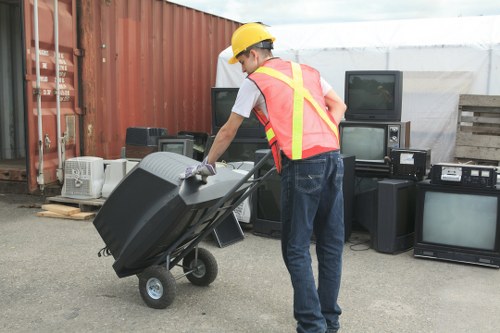
Many office clearances are driven by furniture changes. Desks, chairs, tables and storage units can take up considerable space, and once a workplace is reorganised they may no longer serve the new layout. We can remove single items, partial sets or larger groups of furniture in one visit. If certain pieces need to be separated from the rest, we will do that as part of the job rather than leaving the sorting work behind for you.
It is also common for offices to contain items that are not technically furniture but still need to go as part of a clearance. Screens, small office accessories, shelves, boxed supplies and presentation items may all be included when the space is being cleared. If the work involves a mix of office and domestic-style contents, we can discuss the most practical way to organise it. For furniture-specific removals, furniture clearance is a relevant option.
When items are bulky but still portable, planning matters. A clear path through the office can reduce disruption, and grouped items are often easier to remove than scattered ones. If pieces need to be broken down first, that can usually be factored into the clearance. Where the items themselves are the main issue rather than the room as a whole, furniture disposal may also be useful to compare.
How we approach a workplace clearance
A good office clearance starts with clarity about what stays and what goes. The best results usually come from a simple outline of the rooms involved, the volume of items and any restrictions on access, loading or timing. If there are separate areas such as reception, meeting rooms, storage cupboards or staff rooms, those can be included in the plan. This makes it easier to schedule the work and avoid unnecessary handling.
Where a workplace is still active, we can work in a way that keeps disruption low and avoids unnecessary interference with day-to-day activity. That might mean clearing one area at a time or arranging the removal so the most awkward items go first. For larger projects, it is useful to identify anything that needs special attention in advance, such as heavy items, awkward corners or contents that need to be left untouched. business waste removal may be suitable where the clearance extends beyond furniture and into general commercial waste.
For many customers, the key decision is whether the office needs a selective clearance or a full emptying of the room. Selective work suits reorganisations and upgrades, while full clearances are often used before handing a unit back, refitting or moving on. Either way, a concise description of the job gives a better starting point for a quote than a vague request, and it helps the clearance team understand the sequence of work required.
Office contents, archives and storage areas

Office spaces often include more than visible furniture. Files, archive boxes, stored stationery, packaging and old equipment can build up in cupboards, stores and back rooms over time. When these areas are included in a clearance, it is usually best to work methodically so that important items are not removed by mistake. We can clear storage areas as part of the wider office job, provided the contents and boundaries of the work are made clear from the outset.
Archive-heavy clearances need a little more organisation because the contents may be boxed, shelved or split across several rooms. Rather than trying to rush the process, it is often better to identify what can be cleared and what should remain available for records or review. Where the office includes loft storage, upper cupboards or similar out-of-the-way spaces, loft clearance may help explain the kind of careful, contained removal work involved.
Some businesses are mainly trying to regain usable floor space, while others are dealing with accumulated contents that have been left after years of gradual change. In either case, a planned approach avoids confusion and keeps the job manageable. If you want to compare office clearances with wider property-clearance options, home clearance shows how similar organised removals are handled in another setting.
Preparing for a quote and booking
When you ask for a quotation, the most helpful details are usually the office size, the type of items involved and any access issues that could affect removal. Photographs can make the estimate more accurate, particularly where furniture is bulky, stacked or distributed through several rooms. If there are items you want left in place, it helps to say so clearly at the start rather than during the visit. That keeps the work focused and the quotation more reliable.
It is also useful to mention whether the clearance needs to be completed in stages or within a fixed window. Some offices can be cleared in one visit, while others work better as a phased project around other activity in the building. If you are comparing internal service pages before deciding what to request, waste removal is a straightforward general option for mixed unwanted items that do not fall neatly into a furniture-only job.
Two simple actions can make the enquiry easier: list the main rooms or item groups, and note anything that may need disassembly, separation or restricted handling. With that information, we can judge the scale of the work more accurately and suggest a practical way forward. Once you are ready, use the contact route that suits you best and ask for a clear quotation.
About Norwood
Norwood is a name used for several districts in south London, and the area most commonly associated with it lies across parts of the London Boroughs of Lambeth, Croydon and Bromley. The place name comes from the old “north woodâ€, a reminder of the woodland that once covered much of the district before suburban growth transformed the landscape. Over time, Norwood developed from a rural fringe into a series of residential neighbourhoods linked by main roads, railways and local centres. Its identity is still shaped by the contrast between busy routes and quieter streets, with pockets of open space and civic landmarks spread across the area. One of the best-known features is the area’s elevated ground, which gave parts of Norwood broad views over London and helped define later settlement patterns. The district also has a strong association with Crystal Palace, whose relocation in the nineteenth century brought major change to the surrounding streets and transport links. Nearby green spaces such as Norwood Park and South Norwood Lake and Grounds add a different character, offering a more open setting within the built-up suburb. Churches, schools, terraces and parade shops reflect the area’s Victorian and later suburban development, while local rail stations connect the neighbourhoods with the wider city. The result is a place with a layered history rather than a single centre, where different parts of Norwood retain their own distinct feel while still forming part of a recognisable south London area.
Clearance for offices in different states of use
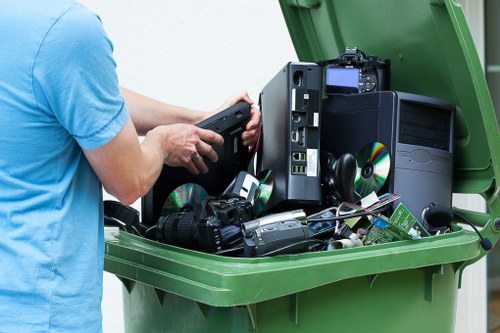
Office clearances are rarely identical from one property to the next. A small professional suite may only need a few desks and chairs removed, while a larger workplace might have reception furniture, breakout seating, filing systems and storage rooms that all need attention. We can adapt the work to suit the condition of the premises, whether the office is fully operational, partly vacated or already being emptied for a move or refurbishment. The aim is to keep the process ordered from the first item to the last.
Where an office has been used over a long period, there may be mixed contents in circulation spaces, cupboards and shared rooms. In those cases, a straightforward plan helps decide what should be taken first and what needs to stay in place until the end. For businesses that want a more general commercial removal, builders waste clearance can be relevant if the site also includes post-refurbishment debris or leftover materials.
We treat each clearance as a practical removal task rather than a one-size-fits-all job. That means the work is shaped around the rooms, the contents and the access points available on the day. If your office also includes unwanted items in other storage or ancillary areas, the same organised approach can usually be extended to those spaces too. garage clearance is another service page that illustrates how mixed spaces can be cleared carefully.
Useful ways to organise the work
Before a clearance takes place, many customers find it helpful to separate the items into broad groups. This is not about creating extra admin; it is about making the removal quicker and reducing the chance of confusion once the team arrives. Items may be grouped as furniture, archives, small office items, mixed waste or pieces that need dismantling. Even a rough grouping can make the quotation and the work itself more efficient.
- Identify the rooms or zones that are part of the clearance.
- Set aside anything that must remain in use or be kept for records.
- Note whether items are loose, stacked, boxed or fixed in place.
- Tell us about stairs, narrow lifts, parking or loading restrictions.
- Flag any pieces that need disassembly before removal.
These practical points are often enough to turn an uncertain request into a workable plan. They also help decide whether the job is mainly a furniture removal, a broader business clearance or a mix of both. If you are ready to move ahead, ask for a quote and we will help you match the service to the space.
Commercial spaces, mixed waste and final removal steps

Some office clearances include more than standard workplace items. Commercial spaces can accumulate broken chairs, packaging, redundant shelving, shop-style displays, old storage and mixed waste that no longer has an obvious place. In those situations, a tidy end result depends on sorting the contents sensibly and removing them in an order that suits the room. We can help with the final clear-out stage so the premises are left ready for the next phase of use.
If the office sits alongside a stockroom, staff facility or other support area, it can be sensible to deal with those spaces in the same project. That keeps the job coherent and avoids repeated disturbance. For locations where the remaining contents are mostly general rubbish rather than furnishings, business waste removal can provide a more fitting comparison point than a furniture-only page.
When you are ready to arrange the work, the main aim is to make contact with enough detail for a proper quotation. A simple outline of the space and the items involved is usually enough to begin. If you want the process to be straightforward from the start, contact us and request a quotation for office clearance in Norwood.